This is an old revision of the document!
MidJourney
Intro
The secret of MidJourney's particular aesthetic is training bias and internal prompt interpretation.
MidJourney models are heavily optimized for:
- composition
- lighting
- color harmony
- artistic styles
They intentionally deprioritize literal accuracy. Instead they aim for visual impact.
That’s why images often look:
- cinematic
- atmospheric
- painterly
Even from simple prompts.
MidJourney does not treat prompts like strict instructions, more like creative direction.
Instead of “do this” you are telling the model “paint something inspired by this idea”.
So the prompt language works more like film direction or art briefs.
MidJourney Prompt Structure
Good MidJourney prompts usually follow this pattern:
- subject
- environment
- lighting
- camera
- style
- mood
- parameters
Example:
ancient stone temple in a jungle clearing, fog drifting through ruins,
soft sunrise light, cinematic wide angle shot,
ultra detailed, atmospheric, dramatic lighting''
The model fills in details creatively.
Hint: Add –p at the end of the prompt to use personalization, or activate it in the toolbox.
Parameters
MidJourney uses parameters that dramatically affect results.
Examples:
- Aspect ratio
–ar 16:9 - Stylization strength
–stylize 750 - Chaos (variation)
–chaos 30 - Weirdness
–weird 100 - Version selection
–v 6
These parameters are often more influential than the prompt itself.
Prompt Tricks
Instead of writing long descriptions, many users stack visual cues.
Example:
brutalist concrete library interior,
massive pillars, shafts of sunlight,
dust particles in air,
cinematic lighting, moody atmosphere,
Kodak Portra 400
Notice the style references.
MidJourney understands:
- film stocks
- photography styles
- art movements
- famous artists
- lens types
These influence the result strongly.
Prompt Weights
MidJourney lets you weight ideas.
Example: forest temple::2 fog::1.5 sunlight::0.5
This tells the model importance levels.
Very useful when balancing elements.
Most amazing MidJourney images come from very short prompts.
Example:
ancient library, candlelight, dust in air
MidJourney already knows how to compose beauty.
Overprompting can actually reduce quality.
Strategy
Use a two-step workflow.
Step 1 Generate the scene concept.
Step 2 Iterate for detail.
Example:
Prompt 1
ancient underground library, candlelight, mysterious atmosphere
Then refine:
ancient underground library, towering bookshelves,
thousands of candles, warm golden light,
cinematic, dramatic shadows --ar 16:9
This mimics how artists refine ideas.
MidJourney has a feature many people overlook.
Style references.
You can upload an image and guide generation with: –sref
This transfers:
- color palette
- lighting style
- visual tone
This is incredibly powerful for consistent aesthetics.
Styles
Cinematic Scene
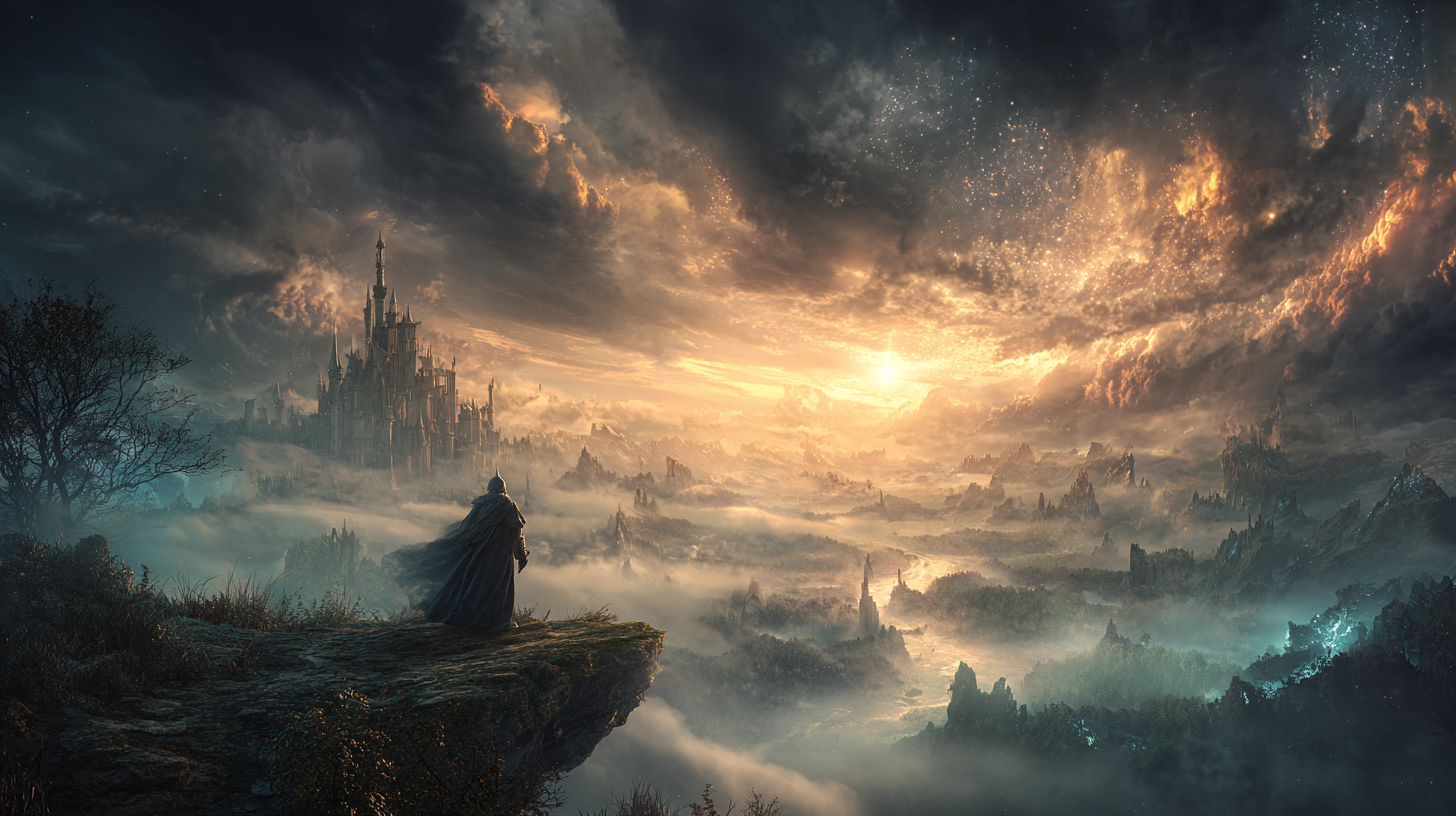
This is the most common MJ structure. It mimics how a film director describes a shot.
Pattern:
subject, environment, lighting, camera, mood, detail
lone mage standing on a cliff overlooking a vast misty kingdom, wisdom,
ancient castles and rivers below,
golden sunrise breaking through clouds,
cinematic wide shot,
epic atmosphere, dramatic lighting, ultra detailed --ar 16:9
- MJ is strongly trained on cinematic imagery
- lighting + camera cues dramatically improve composition
Concept Art
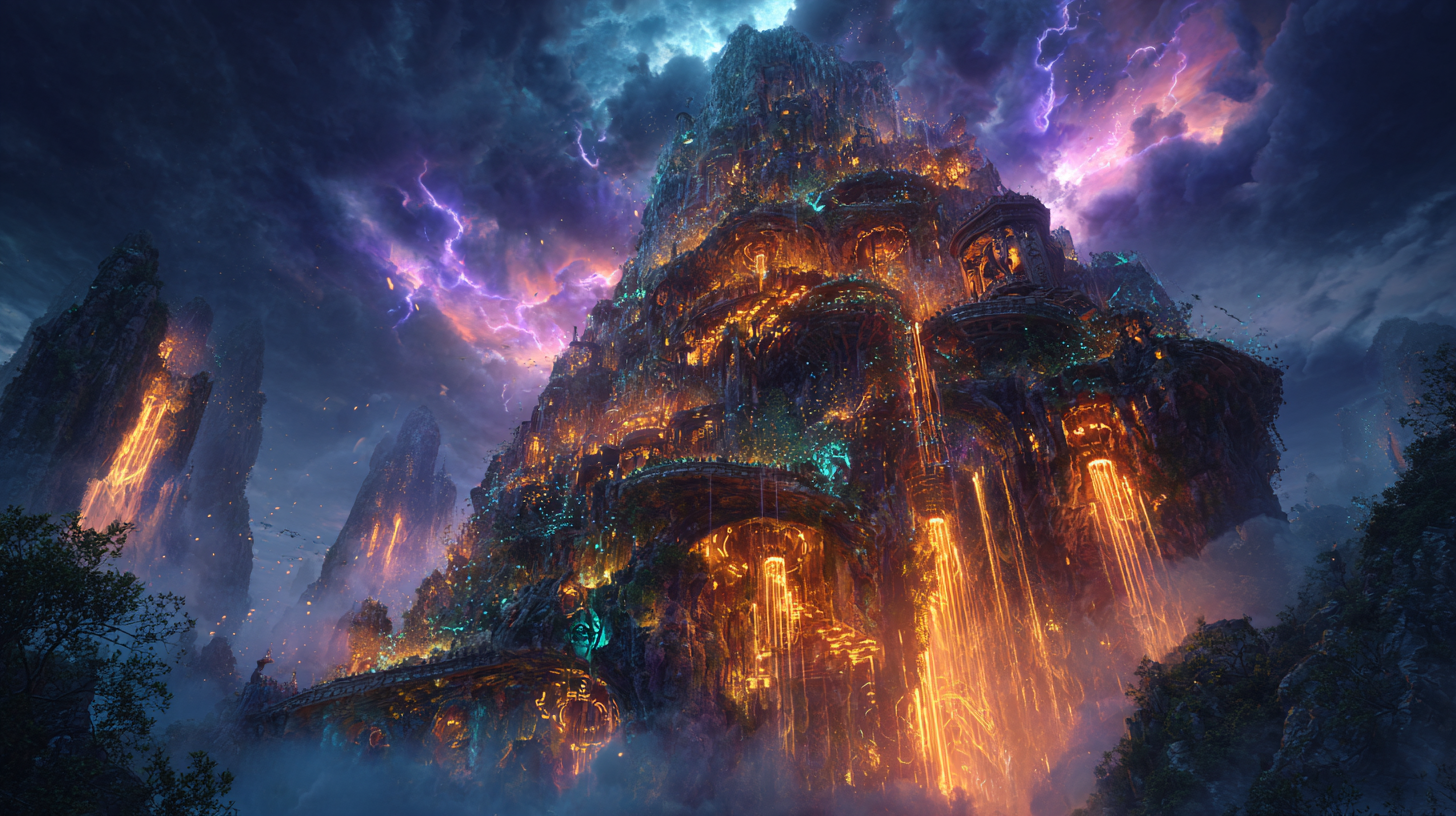
This one is used heavily by game studios and fantasy illustrators.
Pattern:
subject, environment, visual motifs, lighting, concept art descriptors
ancient wizard citadel carved into a mountain,
floating runes and glowing magical waterfalls,
storm clouds swirling above,
epic fantasy concept art,
volumetric lighting, intricate architecture, ultra detailed --ar 16:9
The catch words concept art triggers MJ’s concept-art training data.
This tends to produce:
- huge environments
- fantasy architecture
- dramatic scale
Epic Landscape
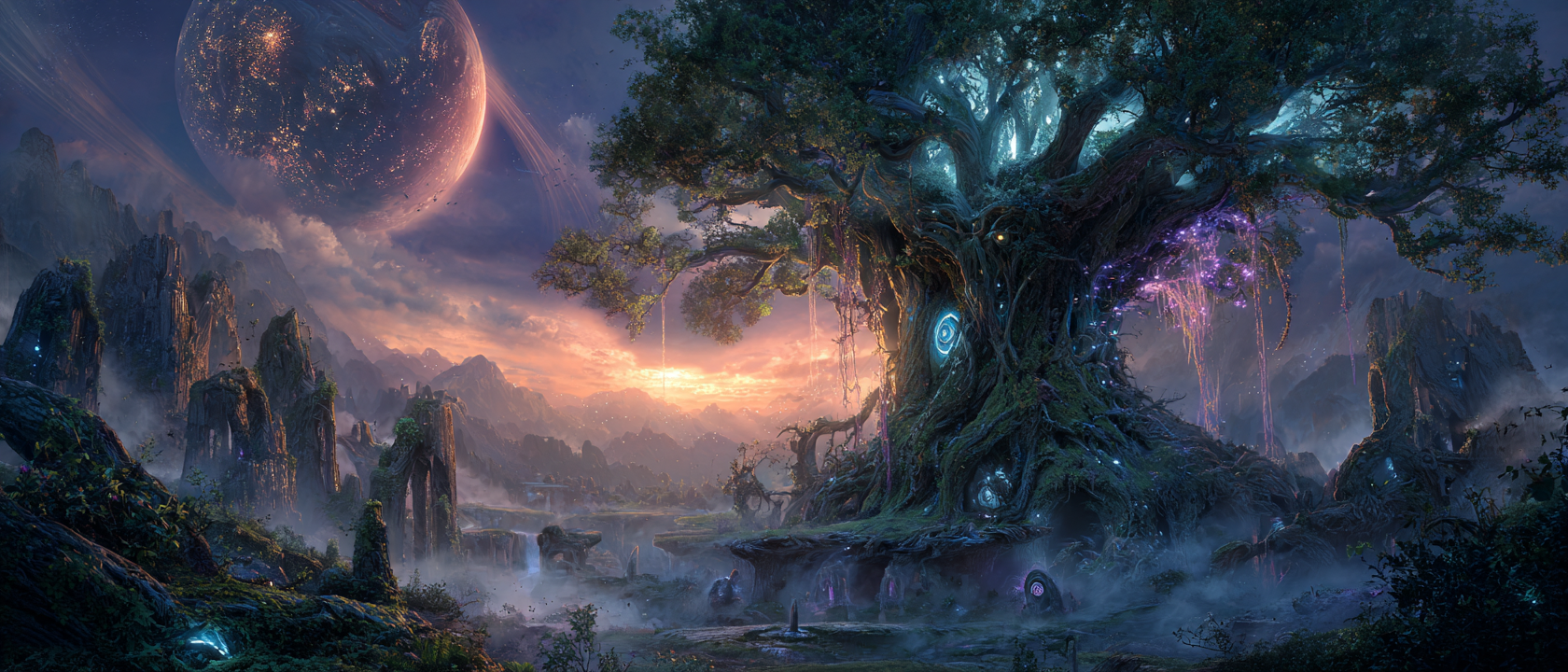
Great for worldbuilding environments.
Pattern:
environment, scale elements, lighting conditions, atmosphere
vast enchanted forest valley,
gigantic ancient trees covered in glowing runes,
huge ring-planets close in sky,
hidden elven ruins beneath the roots,
aerial shot,
soft twilight fog drifting through the valley,
mystical atmosphere, epic fantasy landscape --ar 21:9
MJ excels at landscape depth and atmospheric layering.
Painterly Fantasy
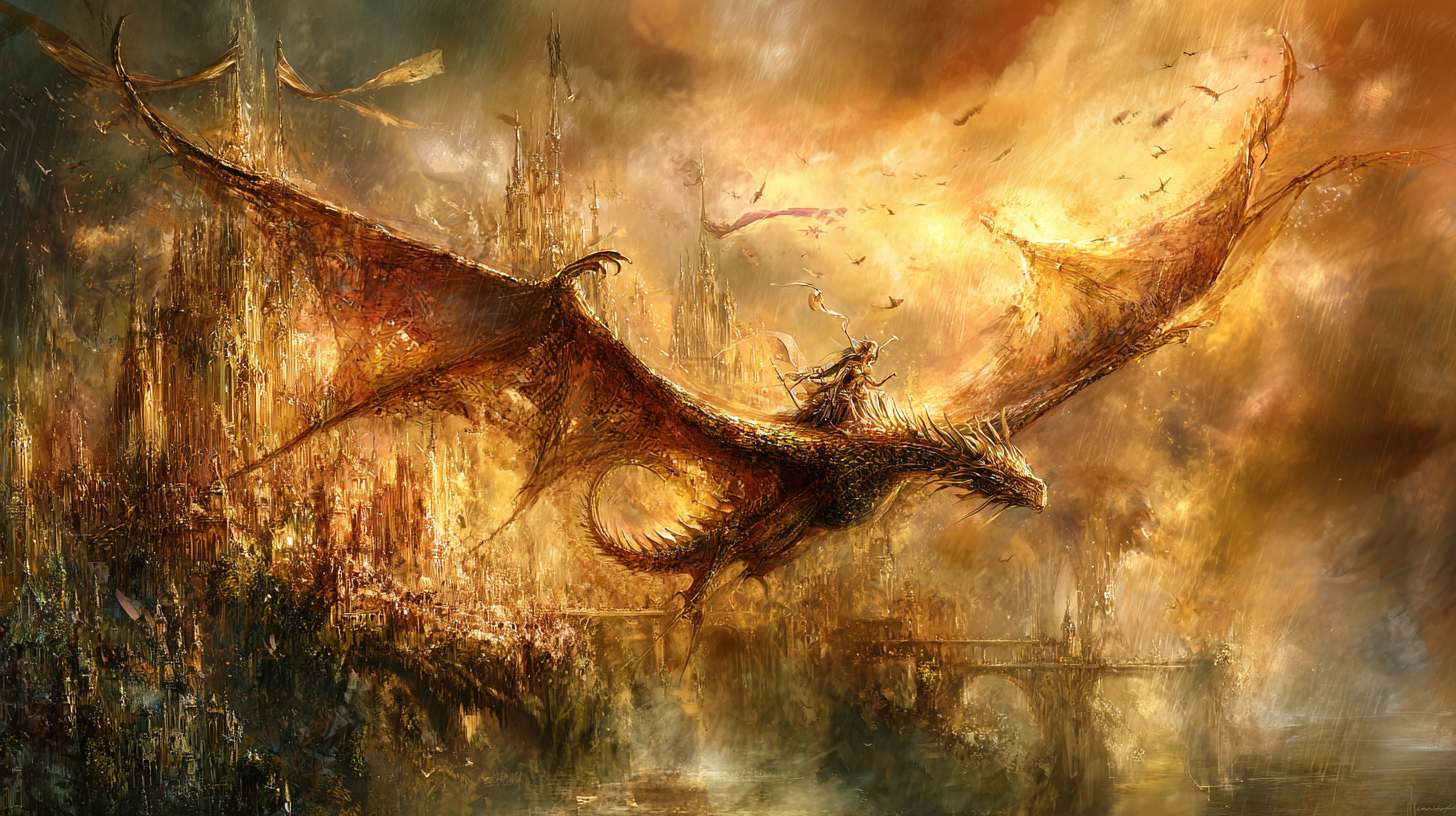
This pushes MJ toward illustration style rather than realism.
Pattern:
subject, environment, artistic style references
dragon rider soaring above a golden medieval city,
banner flags waving from marble towers,
dramatic sunset sky,
epic fantasy painting, oil painting style,
rich colors, masterwork fantasy illustration
Style words like:
- painting
- illustration
- masterpiece
push MJ toward classic fantasy art aesthetics.
Dark Fantasy
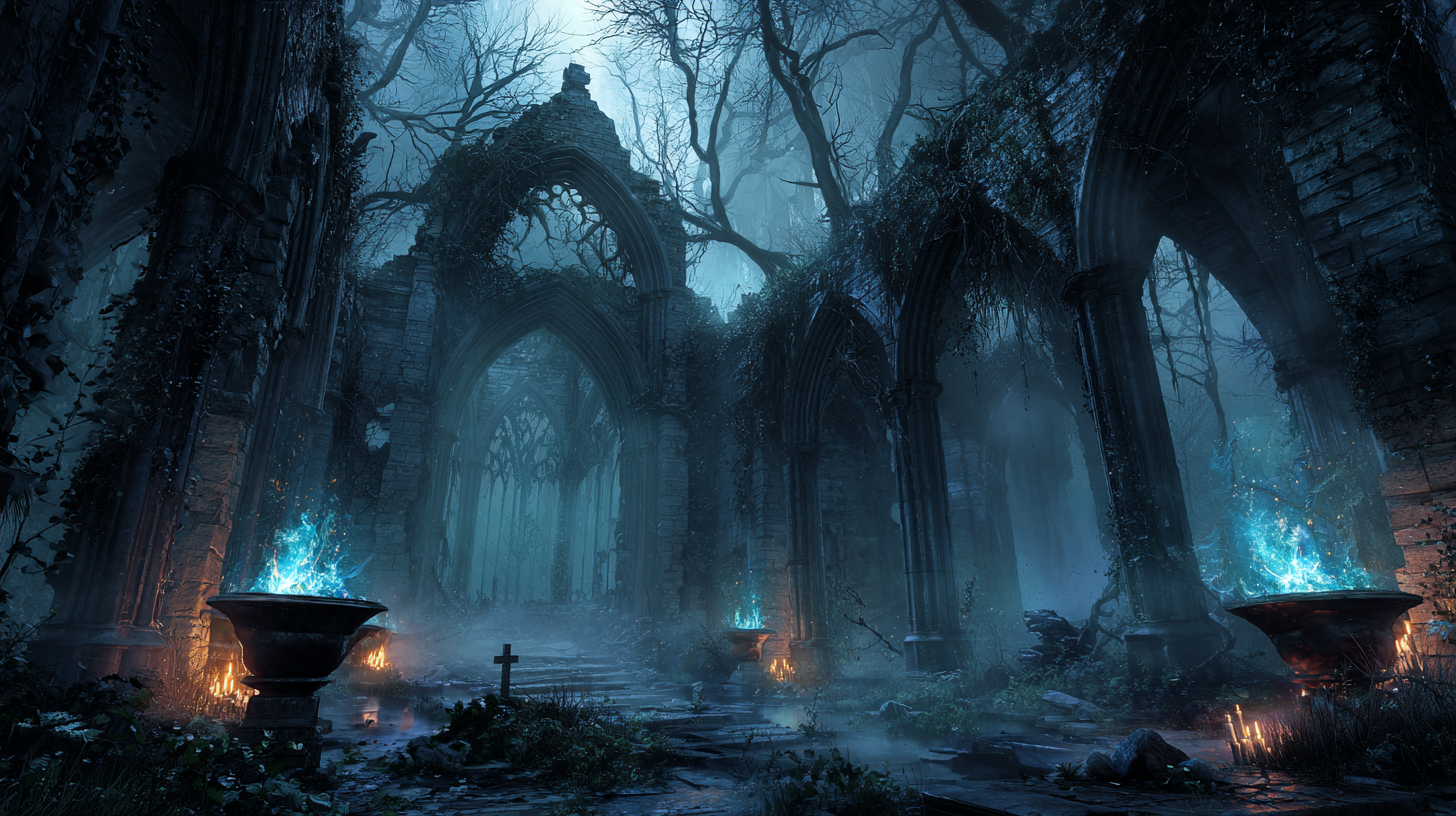
Perfect for mystical, ominous worlds.
Pattern:
subject, gothic elements, lighting, atmosphere
ancient ruined cathedral deep in a haunted forest,
black stone arches covered in vines,
ghostly blue flames burning in iron braziers,
thick fog creeping through the ruins,
dark fantasy, moody cinematic lighting, mysterious atmosphere
MJ is very strong at moody lighting and gothic architecture.
Hero Shot
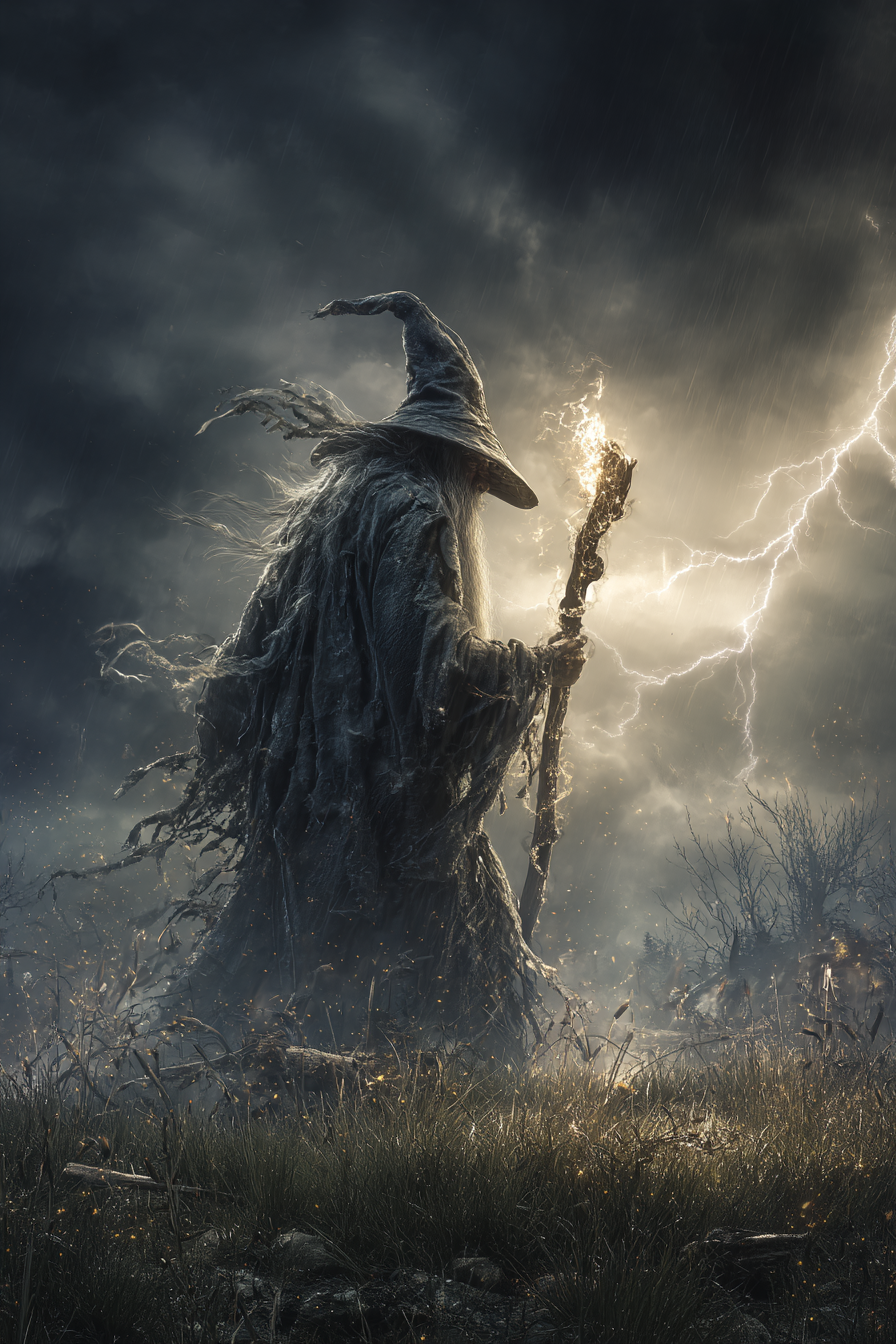
Great for characters in epic poses.
Pattern:
character description, pose/action, environment, lighting
legendary old wizard in long weather-worn robes with pointy hat,
standing atop a battlefield hill holding a glowing staff,
storm clouds behind him,
faint beams of divine particles breaking through the dark sky on the hero,
heroic fantasy, epic cinematic lighting --ar 2:3
MJ loves dramatic silhouettes and heroic framing.
Mythic Creature
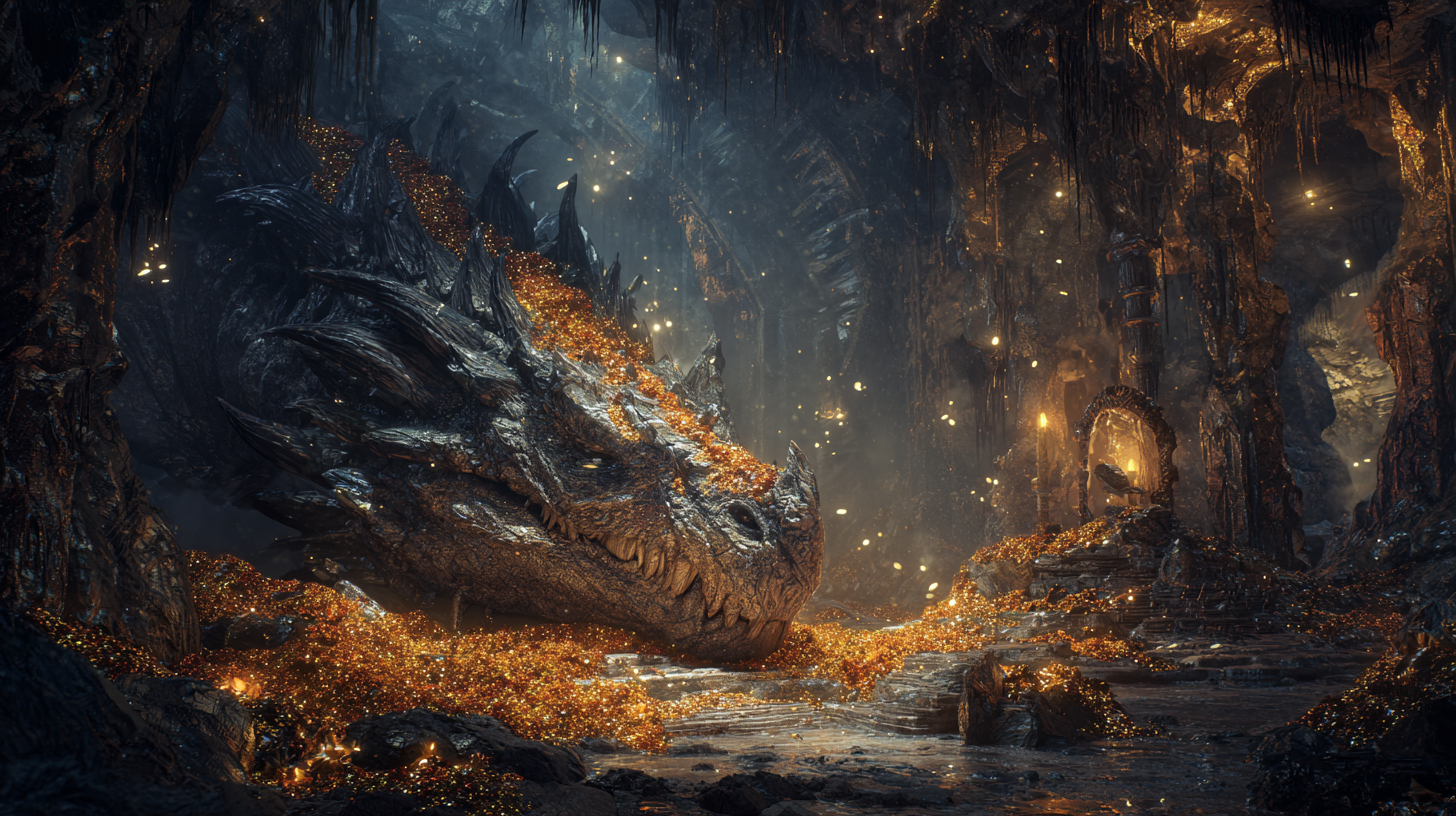
For monsters, dragons, mystical beings.
Pattern:
creature description, environment, lighting, atmosphere
colossal ancient dragon sleeping on a mountain of treasure,
inside a vast underground dwarven hall conquered and abandoned,
river streaks of gold illuminating the cave walls,
embers drifting in the air,
epic fantasy, cinematic lighting, ultra detailed --ar 16:9
Ancient Civilization
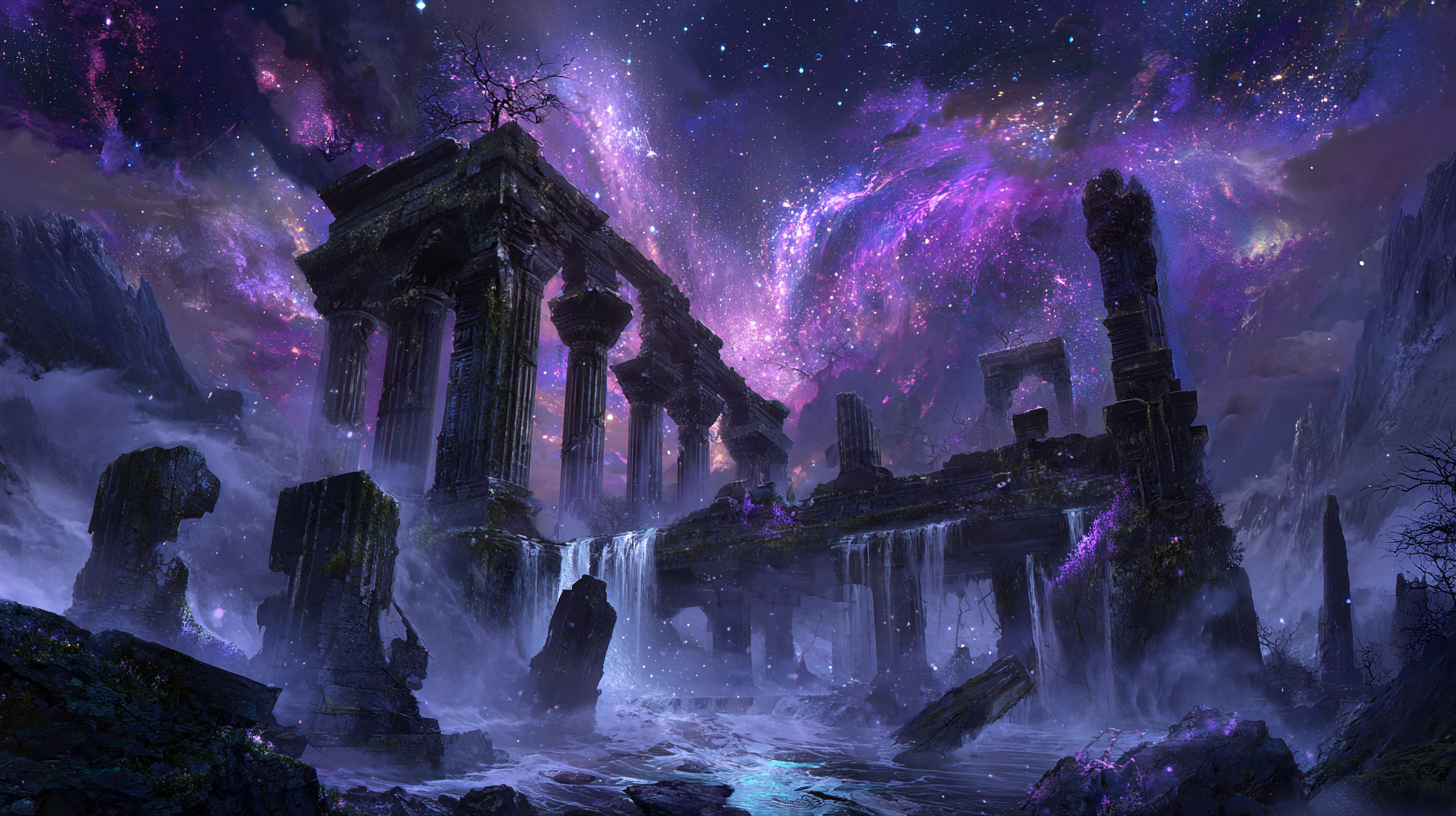
Great for lost worlds and magical ruins.
Pattern:
ancient structure, magical elements, environment, scale
massive forgotten temple of a lost god,
floating in deep space,
stone pillars orbiting the ruins,
ancient runes glowing faintly,
waterfalls pouring from broken towers,
mist rising through the scenery,
mystical stars and galaxy formations in the background,
epic fantasy environment, majestic scale --ar 16:9
Mood-Driven
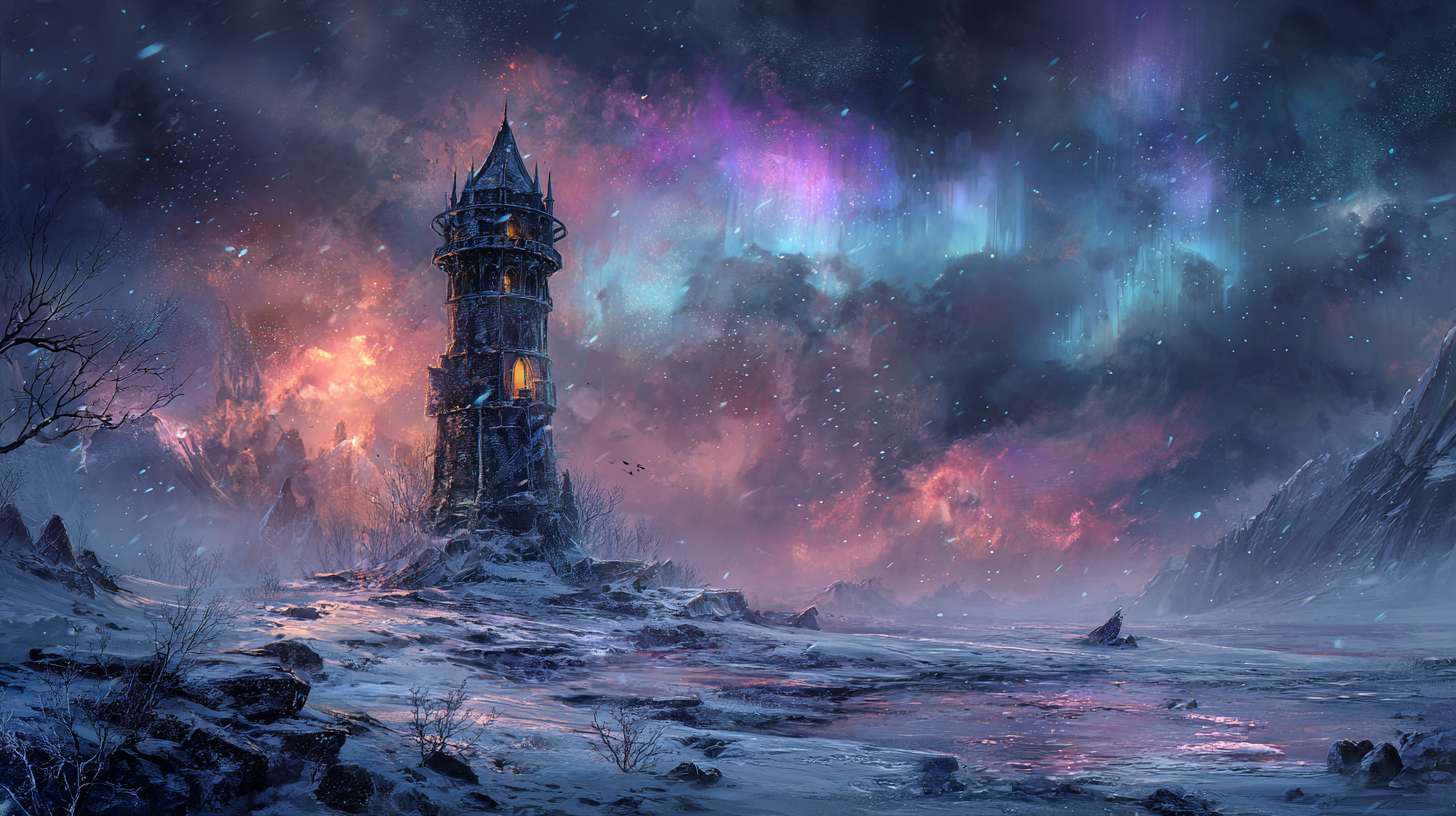
Instead of describing objects, you describe emotion and atmosphere.
Pattern:
place, time of day, atmosphere, visual cues
ancient wizard tower in the middle of a frozen wasteland,
aurora borealis illuminating the night sky,
snow drifting through the air,
lonely magical atmosphere,
mysterious epic fantasy mood --ar 16:9
This produces very atmospheric images.
Minimal Prompt Pattern
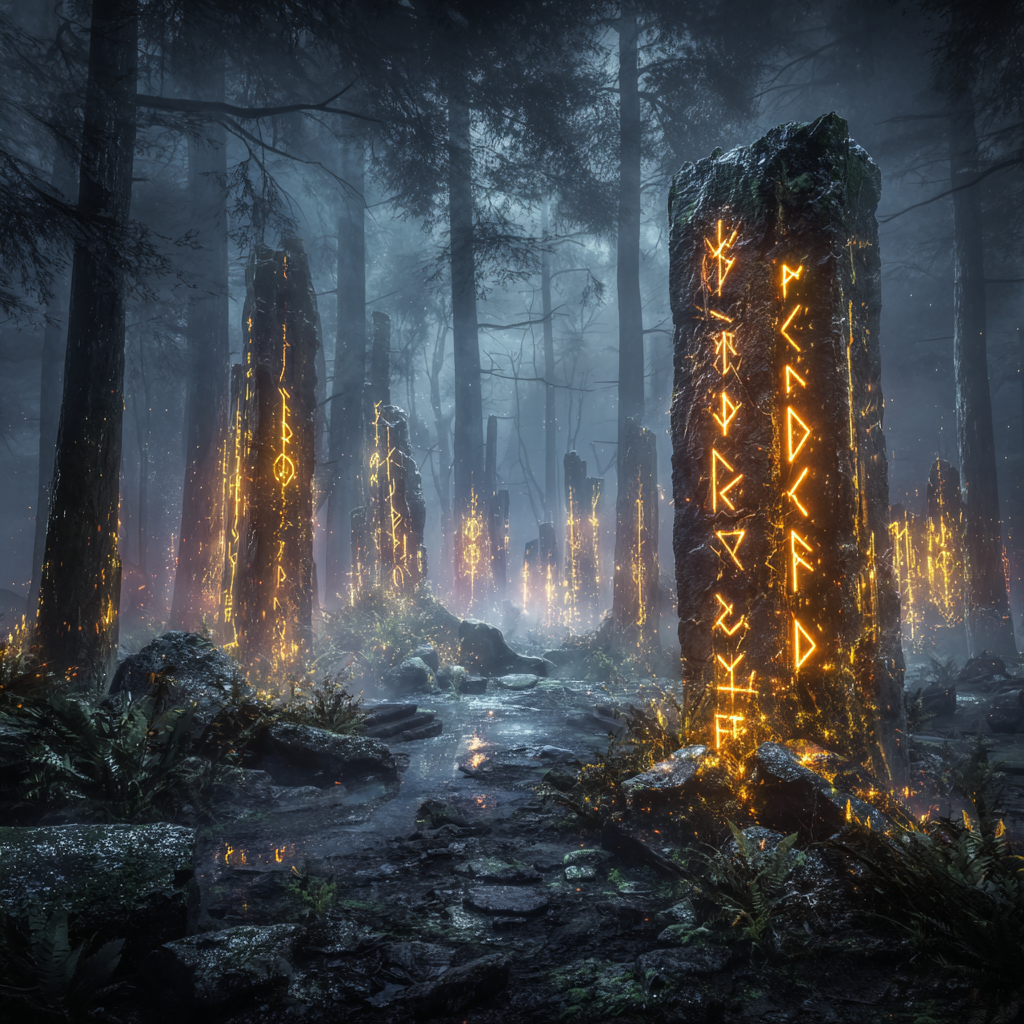
MJ often works best with surprisingly simple prompts.
Example:
ancient enchanted forest temple, glowing runes, mist, epic fantasy
Because the model already knows how fantasy imagery usually looks, it fills in details beautifully.
Many expert users start with very small prompts and iterate.
Power Words in Fantasy Prompts
Certain words trigger stronger MJ outputs.
| Environment | Atmosphere | Lighting | camera |
|---|---|---|---|
| ancient | mystical | golden sunrise | wide angle shot |
| forgotten | ethereal | stormlight | aerial view |
| sacred | epic | glowing runes | low angle |
| enchanted | legendary | torchlight | cinematic shot |
| ruined | ominous | volumetric light | macro shot |
| colossal | divine | - | - |
| towering | - | - | - |
• • • • •